
Bureau Report | Global Trade | Washington, D.C., United States
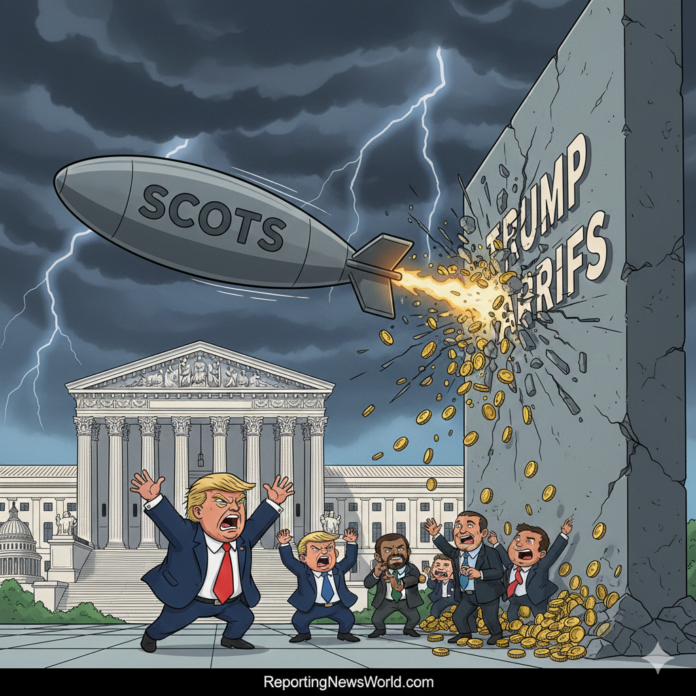
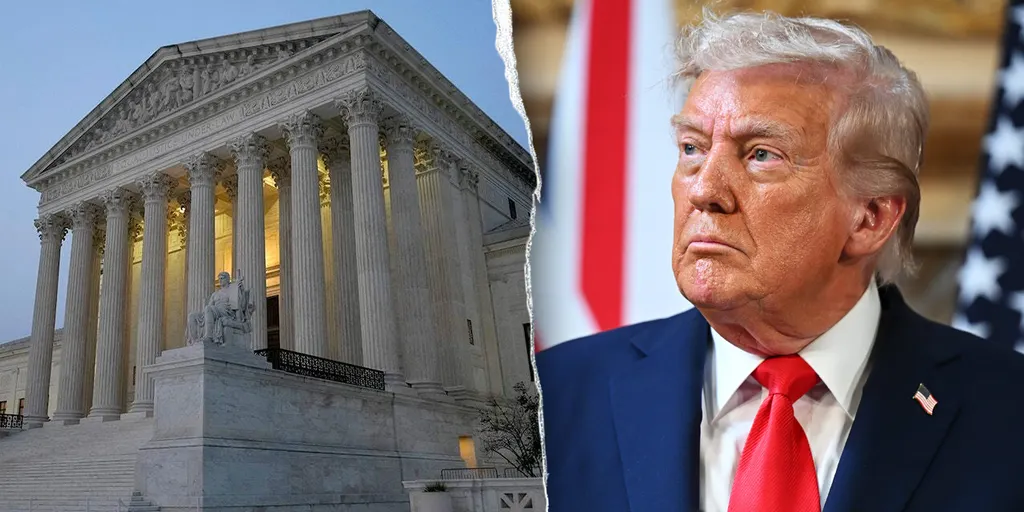
The United States Supreme Court issued a landmark ruling on Friday, February 20, 2026, striking down a cornerstone of the Trump administration’s trade policy. In a 6-3 decision, the Court ruled that the President exceeded his executive authority by utilizing emergency powers to bypass Congress and impose sweeping, broad-based tariffs.
The ruling in Learning Resources, Inc. et al v. Trump centers on the International Emergency Economic Powers Act (IEEPA) of 1977. Chief Justice John Roberts, writing for the majority, clarified that while the IEEPA allows the executive to “regulate importation” during national emergencies, it does not grant the explicit power to levy taxes or duties—an authority the Constitution vests solely in Congress under Article I.
The Legal Check on Executive Reach
The majority opinion emphasized that tariffs are fundamentally a form of revenue generation and taxation. Applying the “major questions” doctrine, the Court held that for an action of such vast economic and political significance, the executive must point to clear, unambiguous authorization from the legislative branch.
- Core Finding: The Court found that the phrase “regulate… importation” in the IEEPA is distinct from the power to “lay and collect” duties.
- The Dissent: Justices Thomas, Alito, and Kavanaugh dissented, arguing that the statute’s broad language was designed to give the President flexibility in responding to global economic threats and that the ruling unduly narrows the executive’s hand in foreign affairs.
Immediate Market Impact and Sector Outlook
The decision has sent shockwaves through global supply chains, specifically targeting the so-called “Liberation Day” tariffs and reciprocal duties that reached as high as 25% for certain trading partners.
| Sector | Impact of Ruling | Current Status |
| Retail & Apparel | High Relief | Significant reduction in costs for imported consumer goods; eligible for refunds. |
| Technology | Moderate Relief | Baseline 10% reciprocal tariffs invalidated; global supply chains stabilizing. |
| Steel & Aluminum | No Change | Duties remain in place as they were enacted under Section 232, not the IEEPA. |
| Automotive | Mixed | Sectoral investigations under other statutes remain active. |
The Path to Refunds
The ruling opens a massive door for U.S. importers to reclaim billions of dollars. Economists at Penn-Wharton estimate that over $175 billion in collected tariff revenue could be subject to refund claims.
The U.S. Court of International Trade and Customs and Border Protection (CBP) are expected to establish specialized procedures for verifying line-item claims. Importers are advised to monitor the liquidation status of their entries, as administrative protests typically carry a strict 180-day statutory deadline.
Administration Pivot: Section 122 and Beyond
President Trump described the Court’s decision as a “disgrace” but immediately pivoted to alternative legal avenues. Within hours of the verdict, the administration announced:
- Section 122 (Trade Act of 1974): A temporary 10% global baseline tariff to address “balance of payments” concerns, restricted to 150 days.
- Section 301 Investigations: New, targeted investigations into specific nations’ trade practices to justify sector-specific duties.
- Congressional Action: The White House is expected to seek explicit legislative authority for a permanent “reciprocal” tariff framework, though success in a divided Congress remains uncertain.
The Supreme Court has effectively signaled that while the President may lead on trade, the power of the purse—and the power to tax—still stops at the doors of the Capitol.
Editorial & Compliance Note
This article reflects market commentary and publicly discussed information. It is intended for informational purposes only and does not constitute investment advice, financial recommendation. ReportingNewsWorld maintains editorial neutrality and does not provide economic advisory services.