

Bureau Report | Global Business & Trade | New Delhi, Delhi, Bharat (India)
Navigating the Storm: FITIG Proposes “Global War Relief Framework” to Safeguard Bharat (India)’s $25 Trillion Vision
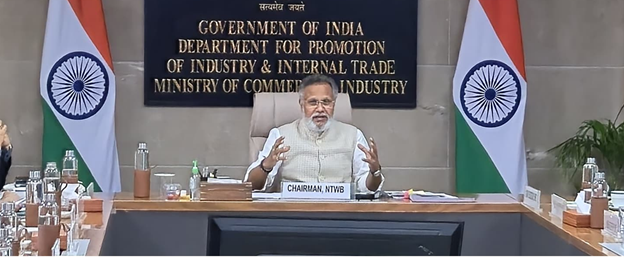
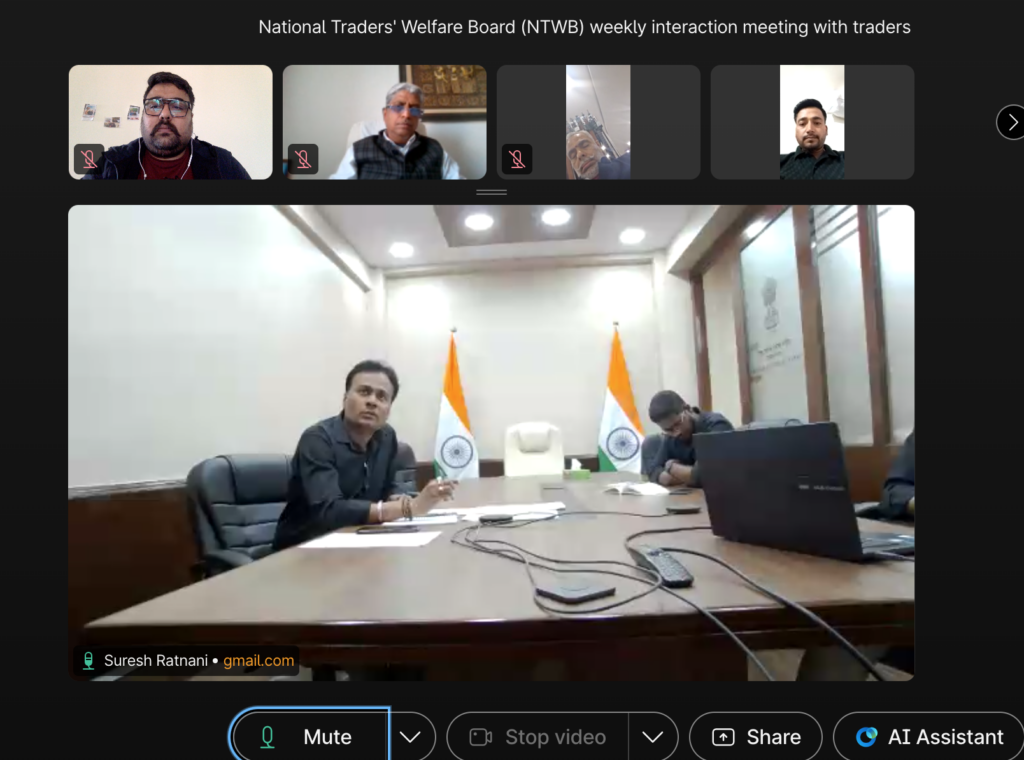
The global trade landscape in Q1 2026 stands at a volatile crossroads. As conflicts escalate in West Asia and maritime corridors in the Red Sea remain compromised, the Federation of International Trade Investor Gunodaya Association (FITIG) has stepped forward with a landmark representation. Aditya Khanna, National Chairman of FITIG, has formally moved the National Traders’ Welfare Board (NTWB) to implement an emergency “Global War Relief Framework” to prevent a systemic collapse of MSME export units.
The Economic Toll of Geopolitical Friction According to the FITIG White Paper, the rerouting of vessels via the Cape of Good Hope has imposed a “Wartime Tax” on Bharat (India)’s exports. Average container rates for the Kolkata-Rotterdam route have skyrocketed from $500 to over $4,000, a staggering 700% increase. Furthermore, transit delays of 15–20 days have effectively “frozen” approximately $15 Billion in Bharatiya liquidity.
The Competitiveness Parity Formula
FITIG has introduced a technical “Competitiveness Parity Formula” to help the government calculate necessary subsidies:
$$C_p = F_b + (T_d \times I_c) + W_r$$
Where $C_p$ is the total cost of export, $F_b$ is base freight, $T_d$ is days of delay, $I_c$ is inventory carrying cost, and $W_r$ is the war-risk premium. The association argues that without a government subsidy ($S$) to neutralize these costs, Bharatiya goods will lose their competitive edge to “China Plus One” rivals.

Four Pillars of Relief
- Financial Liquidity: Increasing interest equalization from 3% to 5% for MSMEs.
- Regulatory Ease: Extending the FEMA export realization window to 18 months.
- Risk Mitigation: Creating a Sovereign-backed National War-Risk Insurance Pool.
- Logistics: Introducing a “Conflict-Route Freight Subsidy” per TEU.
Editorial & Compliance Note: This article reflects market commentary and publicly discussed information. It is intended for informational purposes only and does not constitute investment advice or financial recommendation. reportingnewsworld.com maintains editorial neutrality and does not provide economic advisory services or political affiliations.