
Bureau Report |Infrastructure & Strategic Affairs | February 2026
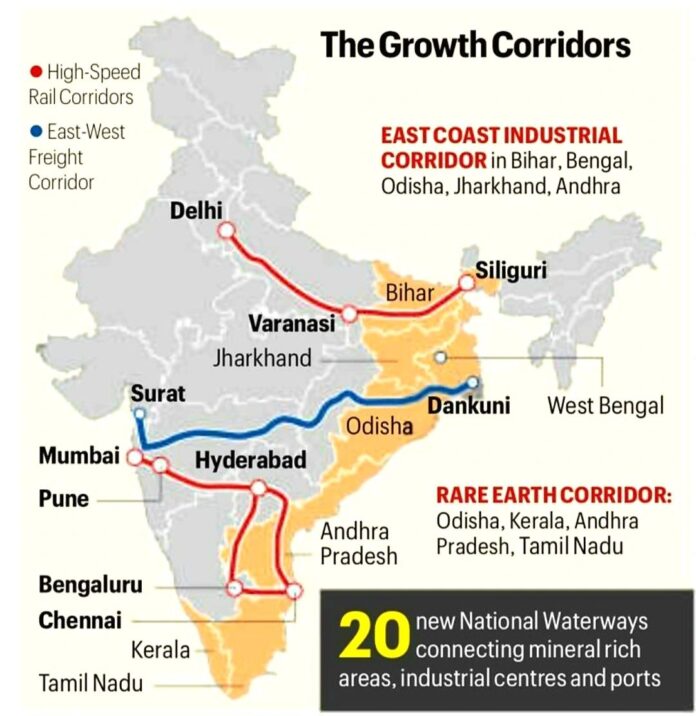
The Government of India has reportedly proposed the development of a 40-kilometer underground rail corridor in West Bengal’s Siliguri region, aimed at strengthening connectivity between the northeastern states and the rest of the country.
The proposal, if implemented, would represent one of the most strategically significant railway infrastructure initiatives in eastern India in recent years. The corridor is expected to run between Tin Mile Haat and Rangapani railway stations, with an extension toward Bagdogra — a location of strategic importance due to its proximity to critical defense infrastructure.
Addressing the “Chicken’s Neck” Vulnerability
The Siliguri Corridor — commonly referred to as the “Chicken’s Neck” — is a narrow stretch of land that connects India’s northeastern states with the mainland. At its narrowest point, it is approximately 20–22 kilometers wide.
Because of its geographical constraints, the corridor has long been viewed as strategically sensitive. Transportation routes through this stretch are essential for civilian movement, commercial supply chains, and defense logistics.
The proposed underground rail alignment is intended to reduce vulnerabilities associated with surface-level infrastructure in the region.
Assam Chief Minister Himanta Biswa Sarma described the proposal as a “major strategic breakthrough,” highlighting its importance in enhancing security and long-term resilience.
Project Scope and Infrastructure Plan
According to available details, the project would include:
- Construction of approximately 40 kilometers of underground railway tracks
- Expansion of the existing double-line network to a four-line corridor
- Dedicated extension toward Bagdogra
- Strengthening of rail capacity for both passenger and freight movement
The underground design is expected to provide enhanced security, operational continuity, and weather resilience compared to traditional surface tracks.
Budgetary Allocation
Government sources have indicated that approximately ₹72,468 crore has been allocated toward railway development projects in Assam and the broader Northeast region. This figure includes multiple infrastructure initiatives, of which the Siliguri underground corridor forms a part.
Final project costs, timelines, environmental clearances, and execution details remain subject to official approval and detailed project reports.
Economic Implications for Northeast India
Improved rail connectivity has the potential to support economic expansion across the northeastern states by:
- Reducing freight transportation costs
- Improving supply chain reliability
- Encouraging industrial investment
- Enhancing cross-border trade opportunities
- Supporting tourism and service-sector growth
The Northeast region has increasingly been positioned as a gateway for India’s Act East policy, connecting domestic markets with Southeast Asia. Improved rail infrastructure could support this broader economic strategy.
Strategic and Security Considerations
In addition to commercial benefits, the project is seen as having significant strategic value. Underground rail corridors can:
- Enhance infrastructure resilience
- Provide secure transit routes
- Ensure continuity during emergencies
- Support logistical readiness
However, defense-related implications and operational details are typically governed by national security protocols and are not publicly disclosed in full.
Environmental and Regulatory Review
Large-scale underground infrastructure projects generally require:
- Environmental impact assessments
- Geological feasibility studies
- Land acquisition clearances (where applicable)
- Budgetary approvals
- Inter-agency coordination
As of now, detailed implementation timelines and construction phases have not been formally announced.
Conclusion
The proposed 40-kilometer underground rail corridor in Siliguri represents a potentially transformative infrastructure development for Northeast India. By addressing long-standing connectivity vulnerabilities and expanding rail capacity, the project may strengthen both economic integration and strategic resilience.
Final implementation will depend on detailed planning, environmental clearances, funding approvals, and phased execution.
Editorial & Compliance Note
This article is based on publicly reported proposals and statements attributed to government representatives. Infrastructure projects are subject to regulatory approvals, budgetary clearances, and implementation reviews. The information provided is for informational purposes only and does not constitute policy confirmation or investment advice. Readers are encouraged to refer to official government notifications for authoritative updates.ReportingNewsWorld maintains editorial neutrality and does not provide economic advisory services.