Bureau Report | Business, Economy, International Trade | New Delhi, Delhi, Bharat (India)
The Unlevelled Playing Field: How Encroachments and Tax Evasion Are Strangling Delhi’s Wholesale Trade
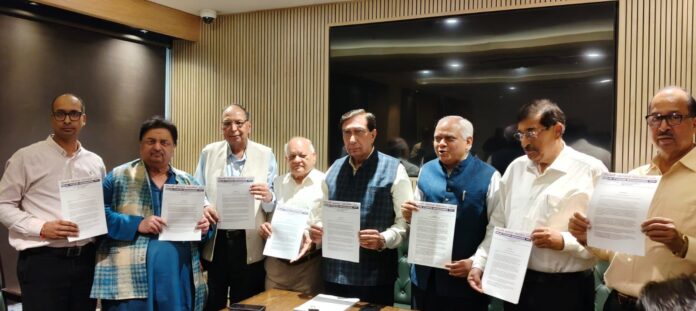
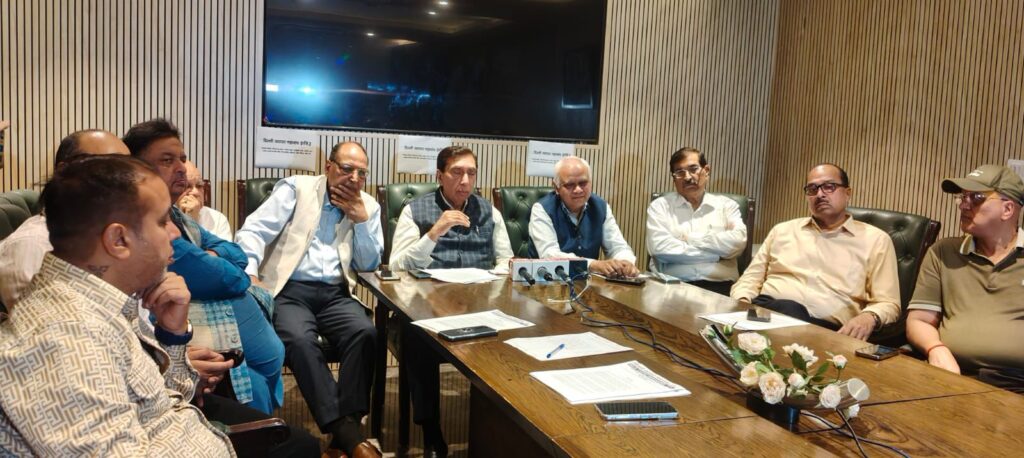
The images of peaceful marches by traders in Sadar Bazaar and Chandni Chowk are more than just local news; they are a stark indicator of a systemic failure that threatens the backbone of India’s commercial capital . The Delhi Vyapar Mahasangh has lifted the lid on a crisis that has severe implications for the business environment, tax compliance, and India’s reputation as a stable market for investment. The conflict between legitimate traders and illegal hawkers is, at its core, a classic battle between the organized, tax-paying economy and an unregulated, tax-evading parallel economy.
The Economics of Encroachment: A Rs 645 Crore Symptom
The traders’ grievance is not merely about space; it is fundamentally about economics. As highlighted in the press release, legitimate shopkeepers pay substantial taxes—GST, municipal levies, and income tax. They operate under a regulatory framework, contributing significantly to the national exchequer. In contrast, illegal hawkers occupy public spaces rent-free, sell goods without generating bills, and pay no taxes. This creates a highly distorted and unfair competitive landscape.
This issue becomes even more alarming when viewed alongside recent financial crimes. The recent detection of a Rs 645 crore GST Input Tax Credit (ITC) scam, orchestrated through 229 bogus firms by a Delhi-based syndicate, reveals the underbelly of this parallel economy . Investigators found that the proceeds from such fraud were allegedly diverted through NGOs and political outfits. The connection is critical: unregulated markets and illegal encroachments can easily become safe havens for laundering money and distributing counterfeit or smuggled goods, bypassing the formal banking and taxation systems.
Impact on Business Sentiment and Investment
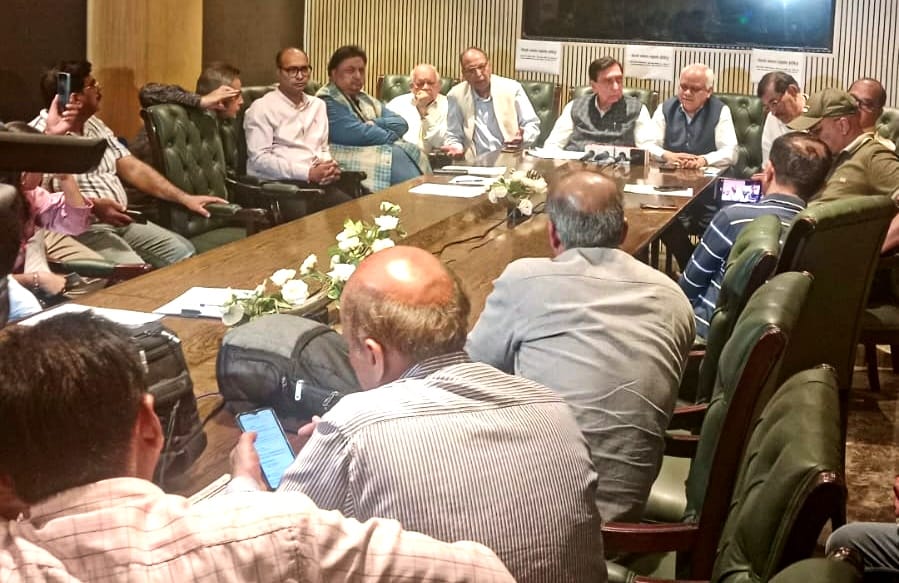
For a global business audience, this standoff is a red flag. Old Delhi is not just a local market; it is a historic hub for wholesale trade in textiles, spices, electronics, and bullion, with supply chains extending across South Asia and the Middle East. Persistent encroachments lead to:
- Logistical Nightmares: Traffic congestion and blocked access increase transportation costs and delay deliveries, reducing the efficiency of supply chains.
- Reputational Risk: International buyers sourcing goods from these markets may inadvertently be dealing with suppliers who are undercut by illegal operators, or worse, with operators involved in the grey market.
- Deterrence to Formal Investment: Why would a global retail chain or a logistics giant invest in modernizing infrastructure in an area where the rule of law is consistently flouted and administrative support is compromised by “large-scale corruption”?
The “Bangladeshi Infiltrator” Angle: A Business Risk?
The allegation that “suspected Bangladeshi infiltrators” participated in the hawkers’ march adds a complex layer of risk . From a business perspective, the presence of a large, undocumented workforce is a ticking time bomb.
- Human Resource Compliance: Businesses face unclear competition from entities employing undocumented labor at exploitative wages, further skewing the market.
- Security Costs: Legitimate businesses are forced to spend more on private security and insurance in areas with higher concentrations of undocumented individuals, increasing their operational costs. A meeting of the Chandni Chowk MP with traders even discussed the need for traders to appoint their own security guards, a cost that should ideally be covered by a safe public environment .
- Supply Chain Integrity: Undocumented immigrants can be involved in the distribution of counterfeit or smuggled goods, infiltrating and corrupting legitimate supply chains.
The Demand for a “Practical and Legally Sustainable Framework”
The Delhi Vyapar Mahasangh’s demand for a framework “in compliance with court directions” is a call for regulatory certainty—the most sought-after commodity in the business world . Businesses thrive on predictability. The current state, where court orders exist on paper but are unimplemented on the ground, creates an environment of anarchy that is anathema to commerce.
The traders are united in “spirit, strength, and resources,” which signals a prolonged period of unrest. For the national and global economy, this means:
- Supply Disruptions: A city-wide protest or market closure in Delhi can disrupt supply chains for essential goods across North India .
- Policy Scrutiny: International observers and credit rating agencies may view this as another instance of governance failure in a key economic zone.
- Tax Revenue Loss: If the formal trading community feels disenfranchised and their businesses suffer, it directly impacts GST collections and overall economic output.
Conclusion: A Call for Good Governance
The traders’ warning to the Prime Minister, Home Minister, and other top functionaries is a last-ditch appeal to the highest levels of governance. The message from the business community is clear: they are willing to pay taxes and follow the law, but they demand a level playing field. The resolution of this crisis will be a litmus test for the administration’s ability to enforce the rule of law, protect honest businesses, and secure the economic future of one of India’s most vital commercial regions. The world is watching to see whether Delhi’s markets will be governed by legal frameworks or by the law of the jungle.
Editorial & Compliance Note: This article reflects market commentary and publicly discussed information. It is intended for informational purposes only and does not constitute investment advice or a financial recommendation. ReportingNewsWorld.com maintains editorial neutrality and does not provide economic advisory services.