
Bureau Report | International Trade | Renewable Energy | Policy
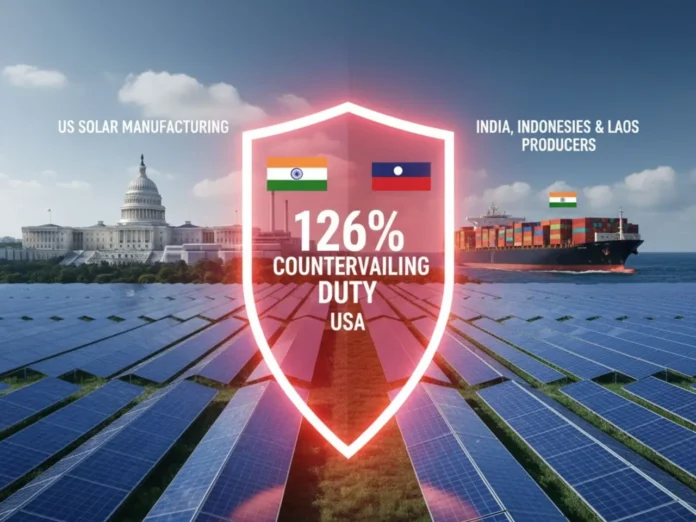
The United States has reportedly slapped a 126% import duty on select solar products imported from India, dealing a fresh blow to Indian solar exporters and potentially reshaping bilateral trade dynamics in the renewable energy sector.
According to industry sources and circulating trade updates, the duty affects a range of solar modules and related equipment exported from India to the US. While an official notice from US trade authorities is currently awaited, market participants say the rate represents one of the steepest tariffs imposed on Indian solar shipments in recent years.
Impact on Indian Solar Exports
The latest duty move comes at a time when India has been aggressively expanding its solar manufacturing base under its Production Linked Incentive (PLI) scheme and aiming to boost exports to key global markets, including the United States.
Several Indian solar companies that had been ramping up shipments to the US now face steeper duties that could erode price competitiveness and export margins. This has led to a reassessment of market strategies and possible redirection of shipments to alternative regions such as Europe, Middle East, Africa, and Southeast Asia.
Analysts point out that such elevated duties could slow down trade flows and investor sentiment, particularly for manufacturers who had counted the US as a priority export destination.
Trade Policy and Legal Context
The imposition of duties in the 100%-plus range typically follows anti-dumping or countervailing investigations under the US trade law framework, where preliminary findings suggest that imports are priced unfairly or benefit from subsidies.
Under World Trade Organization (WTO) standards and bilateral trade obligations, countries like the US have leeway to enforce such tariffs when domestic industries demonstrate injury. However, the procedures involve detailed investigations and opportunities for responding parties to contest findings through legal channels.
Industry Reaction: FITIG Weighs In
Reacting to the development, the Federation of International Trade Investor Gunodaya Association (FITIG) expressed concern about the broader implications for global solar trade.
A FITIG spokesperson said:
“The imposition of high import duties such as 126% on solar products has the potential to disrupt supply chains and investment flows. While countries have the sovereign right to protect domestic industries within WTO-compliant frameworks, such measures must balance trade fairness with global renewable energy transition goals. We believe constructive bilateral dialogue between India and the United States is essential to ensure long-term stability in clean energy trade.”
FITIG further called for transparent communication between governments and industry stakeholders to mitigate uncertainty for exporters and investors.
What This Means for the Market
Industry watchers say that the new duty could trigger a ripple effect across global solar supply chains, prompting Indian manufacturers to:
- Explore non-US markets more aggressively
- Adjust pricing and cost structures
- Seek policy support through government-to-government channels
- Reevaluate long-term export commitments to the US
Trade and policy experts also note that Indian solar exporters have the right to pursue legal recourse through US administrative review processes or seek dispute resolution under the WTO if they believe due process has not been followed.
Looking Ahead
With the implementation mechanics and product scope yet to be clarified by official US trade publications, Indian authorities and solar industry bodies are expected to closely monitor the situation in the coming weeks.
For now, the development adds a new layer of complexity to what has already been a fiercely competitive global solar market, as countries vie to secure manufacturing capacity, investment, and clean energy commitments.
Legal and Trade Framework Context
Under international trade rules, countries may impose:
- Anti-dumping duties
- Countervailing duties
- Safeguard measures
provided investigations establish material injury to domestic industries.
Trade experts caution that any formal dispute, if raised, would follow established legal procedures under international trade agreements.
At the time of publication, official confirmation and detailed tariff schedules from US trade authorities were being reviewed.
Broader Global Context
The solar manufacturing industry remains a strategically sensitive sector amid:
- Energy security concerns
- Supply chain diversification efforts
- Clean energy transition goals
- Industrial policy competition
Observers suggest that policy shifts in one major economy can have ripple effects across global renewable markets.
Disclaimer
This report is based on publicly circulating information and preliminary trade assessments. Readers are advised to refer to official government notifications for confirmed tariff details. Reporting News World does not provide legal or financial advice.