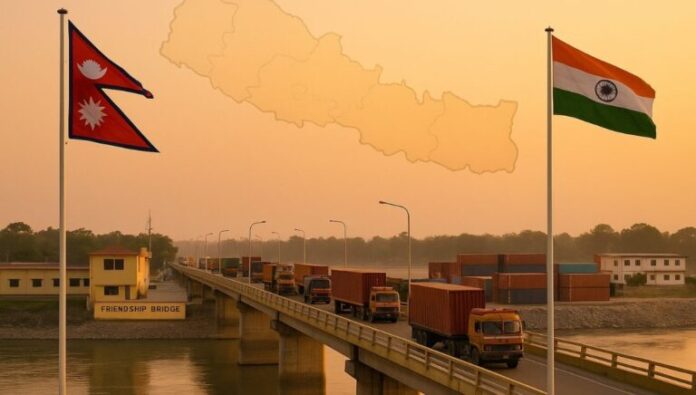

Bureau Report | Kathmandu, Nepal | Trade
Senior business leaders from Nepal have raised concerns regarding the economic impact of il-legal cross-border trade, emphasizing potential revenue losses and pressure on domestic industries.

In an official communication dated February 13, 2026, Mr. Bibek Manandhar, Executive Director of the Federation of Nepalese Chambers of Commerce & Industry (FNCCI) Bagmati Province, outlined the economic implications of goods allegedly entering Nepal through informal and unauthorised trade routes suggestions regarding open border.

The letter was addressed to Mr. Aditya Khanna, National Chairman (Bharat) of the Federation of International Trade Investor Gunodaya Association (FITIG), and discussed broader concerns related to goods bypassing customs procedures through the open Nepal–India border suggestions regarding open border….

Mr. Durga Raj Shrestha, Vice President of FNCCI Bagmati Province, Nepal, has also been associated with discussions within the provincial chamber leadership regarding strengthening formal trade mechanisms and protecting Nepal’s domestic industries.

FNCCI is associated as an alliance partner of the Federation of International Trade Investor Gunodaya Association (FITIG) for Bharat and Nepal, supporting cross-border economic dialogue and trade cooperation initiatives.
Revenue and Domestic Industry Concerns
According to the communication, unauthorized inflow of goods may contribute to reduced government revenue collection, as such goods are not subject to customs duties, taxes, or regulatory compliance requirements suggestions regarding open bord…. The letter suggests that lower revenue may affect the government’s ability to invest in infrastructure, healthcare, and education sectors.
The correspondence further notes that lower-priced goods entering outside formal channels may create competitive pressure on domestic industries, particularly in sectors such as garments, footwear, electronics, and agricultural products suggestions regarding open bord…. Local producers may face operational challenges when competing against products that do not bear standard taxation or compliance costs.
Market Integrity and Consumer Safety
The document also references concerns regarding market imbalance and consumer protection suggestions regarding open bord…. Goods entering without regulatory inspection may not undergo standard quality testing procedures, potentially impacting consumer safety and fair competition within the marketplace.
Proposed Policy Measures
The communication outlines several recommended measures suggestions regarding open bord…, including:
- Strengthening border monitoring and surveillance systems
- Modernizing customs operations through digital tracking and automated clearance
- Enhancing intelligence sharing and joint coordination between Nepal and India
- Simplifying legal trade procedures to encourage formal commerce
- Promoting domestic production and public awareness campaigns
The letter emphasizes that coordinated bilateral cooperation, policy reforms, and structured enforcement mechanisms are essential to safeguard economic stability.
Regional Trade Context
Nepal and India share a historically open border that facilitates trade, tourism, and cultural exchange. Trade observers note that while this framework supports regional integration, efficient regulatory oversight and strengthened formal trade channels remain critical to minimizing unauthorized commercial activity.
Editorial Disclaimer
This report is based on official correspondence dated February 13, 2026. ReportingNewsWorld has not independently verified specific trade figures referenced in the communication. The article reflects the views expressed in the submitted letter and does not constitute a legal finding or formal determination of wrongdoing against any individual, entity, or government authority.